
Understand where your packaging goes
Extended Producer Responsibility for packaging is changing the way businesses account for the packaging they supply.
For organisations affected by the UK packaging EPR regulations, understanding whether packaging is ultimately supplied to households can have a direct impact on reporting requirements and waste disposal fees.
The EPR
What is Extended Producer Responsibility?
Extended Producer Responsibility — commonly known as EPR — is the UK system designed to make organisations responsible for more of the environmental cost of the packaging they place on the market.
Businesses that supply or import packaging may have obligations under the regulations, depending on factors including the size of the organisation and the amount of packaging it handles.
These obligations can include:
- registering with the appropriate environmental regulator;
- collecting and submitting packaging data;
- identifying the type and material of packaging supplied;
- determining whether relevant packaging is household or non-household packaging;
- meeting packaging recycling obligations; and
- for obligated large producers, paying applicable packaging waste disposal fees.
The result is that accurate packaging data is becoming increasingly important.
Why does household packaging matter?
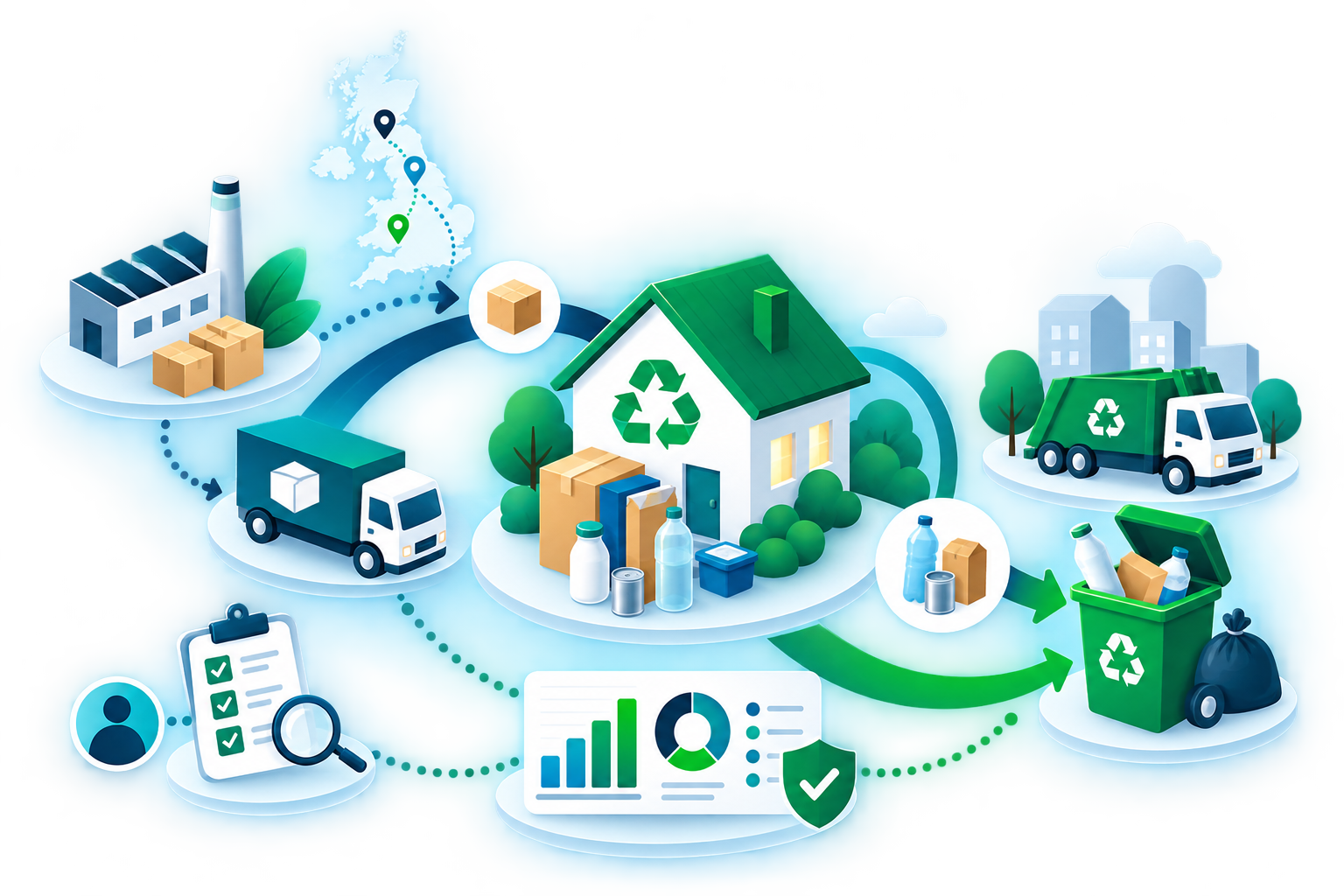
Under EPR, certain waste disposal fees are associated with packaging that enters the household waste stream.
This means a packaging supplier may need to understand not only what it sells, but also where that packaging ultimately ends up.
That can become difficult when packaging is supplied business-to-business.
For example, you might supply packaging to:
- a manufacturer;
- an online retailer;
- a wholesaler;
- a food producer;
- a fulfilment company; or
- another commercial organisation.
Some of that packaging may remain entirely within a commercial environment.
Some may ultimately be supplied with products to consumers and enter the household waste stream.
Knowing the difference can be important when assessing and reporting your packaging data.

You know who you supplied. But do you know where the packaging went next?
Your sales records can tell you which customers purchased packaging from you.
They may not tell you what those customers subsequently did with it.
A customer might use all of your packaging for business-to-business distribution. Another might use exactly the same packaging to send products directly to households. A third could do both.
Trying to establish this manually across hundreds or thousands of customers can be time-consuming, inconsistent and difficult to manage.
EPR Survey provides a structured way to collect that information.
How EPR Survey works
1. Provide your customer information
You securely provide the details of the customers you need to survey, together with the relevant packaging categories or information required for the exercise.
2. We contact your customers
EPR Survey sends professionally presented communications explaining why the information is being requested and asking customers to complete a short online survey.
3. Customers tell us how the packaging is used
The survey asks customers to provide information about the destination and use of the packaging they purchase from you, including the proportion that is ultimately supplied to domestic users where appropriate.
4. Responses are collected and monitored
We provide a consistent process for collecting responses, tracking participation and identifying customers who have not yet supplied information.
5. You receive structured evidence
The results give your organisation a clearer, documented picture of how customers use the packaging you supply.
This information can then support your internal EPR assessment, packaging reporting processes and discussions with your compliance advisers or compliance scheme.
Better evidence. Better packaging data.
EPR Survey has been designed around a simple principle:
Packaging businesses should be able to make reporting decisions based on evidence rather than assumptions.
Our surveys help create a documented information trail between packaging suppliers and their customers.
This can help your organisation:
- understand the destination of packaging supplied to business customers;
- distinguish between different packaging use cases;
- identify packaging that may ultimately enter household waste streams;
- reduce reliance on broad assumptions;
- maintain records supporting your packaging classifications;
- improve the quality of information available to your EPR team; and
- simplify what could otherwise become a large customer-data collection exercise.
Built for packaging businesses
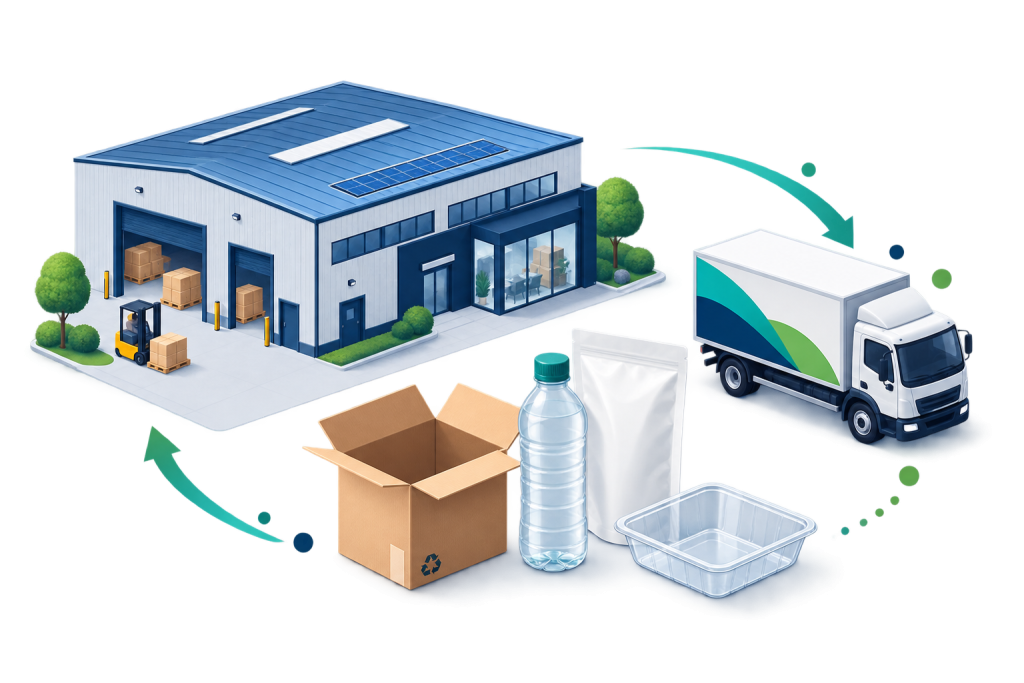
EPR Survey is designed specifically for organisations operating within the packaging supply chain.
That focus means our communications can be written in language your customers understand, while keeping the process professional, consistent and easy to complete.
Whether you supply packaging to a few dozen customers or several thousand, the objective is the same:
find out how your packaging is actually being used.
Why independent surveying helps

Asking customers for regulatory information can place additional work on sales teams, account managers and administrative staff.
Using EPR Survey creates a dedicated process for gathering that information.
Your customer receives a clear request explaining:
- who the survey is being conducted for;
- why the information is required;
- what information they need to provide; and
- how to submit their response.
Responses can then be collected in a consistent format rather than being spread across emails, spreadsheets, telephone notes and individual account records.
EPR is creating a new data challenge

For many packaging businesses, EPR is not simply a finance or compliance issue.
It is a data issue.
Businesses increasingly need to understand the journey packaging takes after it leaves their premises.
Where reliable information already exists, that may be straightforward.
Where it does not, organisations need a practical way of gathering evidence from the businesses closest to that information — their customers.
That is the role of EPR Survey.
FAQs
What happens to the survey results?
The information collected through your survey is compiled into a structured set of results for your organisation, giving you a record of the information supplied by participating customers.
Does EPR Survey determine my legal EPR liability?
No.
EPR Survey is an information-gathering service. We help businesses obtain information from their customers that can support their packaging assessments and reporting.
EPR Survey is not a government body, environmental regulator or substitute for legal or specialist compliance advice.
Can I simply ask my customers myself?
Yes.
EPR Survey exists because carrying out the exercise consistently across a substantial customer base can involve significant administration.
We provide a structured surveying process so that requests, responses and follow-ups can be managed centrally.
Why do I need to know whether packaging reaches households?
Household and non-household classifications can affect how packaging is treated under the EPR system.
For obligated large organisations, applicable waste disposal fees relate to relevant household packaging and other specified categories.
If packaging is supplied initially to another business, you may therefore need information about what happens to that packaging further down the supply chain.
Does EPR apply to every packaging company?
Not every organisation has identical obligations.
Your responsibilities depend on circumstances including the packaging activities your organisation carries out, the amount of packaging you handle and the size of your organisation.
You should assess your obligations using current government guidance or obtain appropriate professional compliance advice.
What is EPR?
Extended Producer Responsibility for packaging is the UK regulatory framework under which organisations supplying or importing packaging can be required to report packaging data and contribute towards recycling and waste-management costs.
The system is intended to transfer more of the cost of managing packaging waste to organisations involved in placing packaging on the market.
Make your EPR reporting evidence-led
If the classification of your packaging depends on what happens after it reaches your customers, relying on guesswork is not a sustainable approach.
EPR Survey gives you a straightforward way to ask, record and understand.
Find out where your packaging goes.
Build better evidence.
Support more confident EPR reporting.